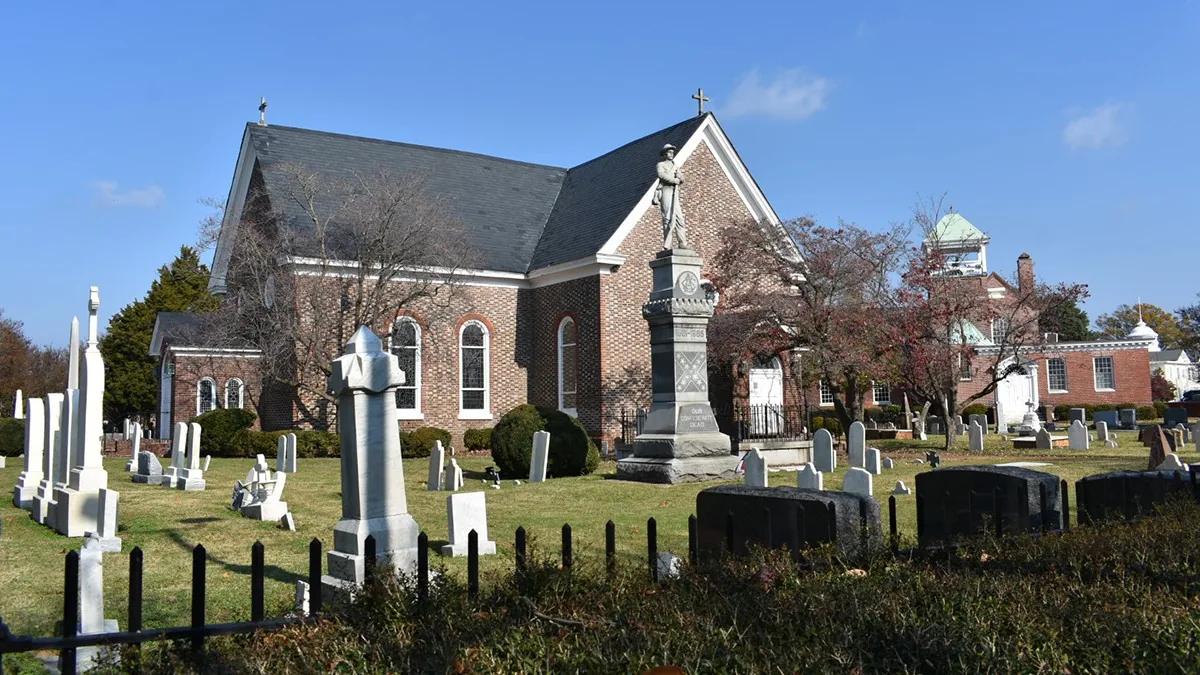
In a corner of the copy room of the Parish House stands a vintage, heavy-metal safe, which holds great wealth. Rather than cash, it protects about a dozen large, priceless volumes of vestry minutes and other records, many hand-written, of St. John’s Church. The Heritage Group has been digging into these caches of historic information since May, as the church re-opened after its initial lockdown on Friday, March 13.
In a meeting before the lockdown, Samantha had asked the group to look through the records with the objective of determining the historic relationship of the church to Africans who first came to the community in 1619 and enslaved persons. This is a diocesan-wide study requested by the Bishop of Southern Virginia, Susan Haynes, as part of a study by the national church at this time of historic unrest.
Although our church was established in 1610 with the founding of the community of Kecoughtan, early minutes are lost. The group’s study, which is still ongoing, began with the minutes of 1751, the earliest available, when the church was called the Elizabeth City Parish Church. Members at that time worshipped within the walls of our present church, its fourth site, although it had neither heat nor cool air nor electricity.
Early members of the church were also English citizens, who considered their local church as part of the state. Their many transactions of community social work were in pounds, shillings, pence and half-pennies. This did not change until the 1780s, well after the Revolution, when the new nation, the United States of America, had to establish its own currency, as well as a system to provide help for its needy citizens. The church was re-named St. John’s in 1830, after its recovery and rebuilding from the War of 1812.
Heritage Group members expect to finish their reports early next year.
Originally published in St. John’s Newsletter, October 2020.