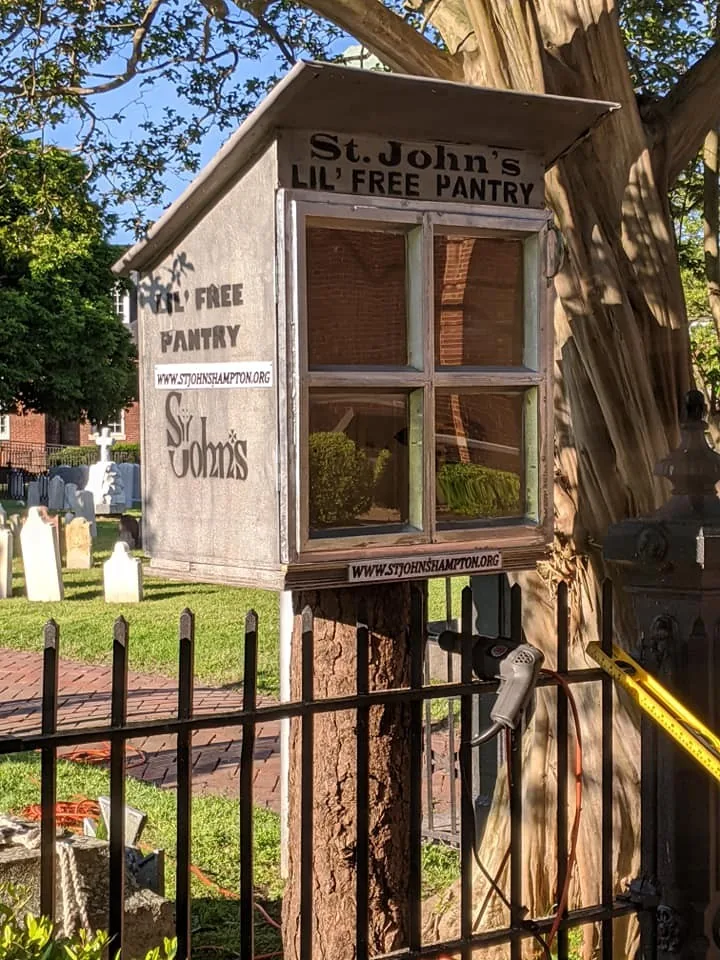
The Little Free Pantry (LFP) program is built around neighbors helping neighbors. In some areas, the LFP is often for those who are not easily able to meet everyday food and personal needs. In all places, the Little Free Pantry is for those who want and/or need to give.
Since the program began six months ago, I have personally seen hundreds of items that have cycled through our LFP and, like many programs, numbers usually gauge impact. However, when I walk up to the pantry door, I find items that have just appeared overnight. In truth, we have no way of knowing how many items have appeared and disappeared. Both those who restock and those who receive stock come and go undercover, virtually unnoticed, so we only see a portion of the total.
I am likely in my clericals when I stock the pantry, so I lose the anonymity of someone that stocks or takes stock. As I stock, neighbors, business people, and sometimes the people who receive items stop and thank us. They comment on how wonderful it is that we provide this resource, “especially now,” or ask questions about donations.
People that have received items always ask me to thank all the people who have contributed and then they walk off, never stopping to receive anything, even when I offer. They may have needs, but this pantry offers something that a feeding program cannot: a small amount of control. Food programs operate as “service providers” and those who use them as “clients.” The LFP dissolves that professional boundary. Whether people are stocking or removing stock, everyone approaches the LFP the same way, which mediates the shame that accompanies need.
The word shame is derived from the roots of an older word meaning “to cover.” Shame arises from global devaluation of the self; it evokes the desire to hide, escape, or even cover. Sadly, shame is part of the stress of food insecurity. In a small way the LFP not only allows access to food 24/7 but it gives back control to a person in need and helps to mitigate some of the shame.
This would not have happened without the compassion of our youth who wanted to help their neighbors in need. Their passion combined with the ongoing support of our church family, local community supporters, and weekly donations from St. Mark’s shows how much “neighbors helping neighbors” can mean.
During a time in history where need has far outpaced the ability to meet it, your support of the LFP offers more than a can of soup or a protein bar: it shows we care about our neighbors—sight unseen. By offering this resource unconditionally, we grow closer to showing the type of love Christ intended us to show, and offers a resource that helps mediate the shame around food insecurity.
Thank you for your continued support of this and all our ministries. Whether you can see it or it is “undercover,” you are making a difference. In the words of one who received: “Thank you and may God bless you all.”
Originally published in St. John’s Newsletter, October 2020.