Lot 233
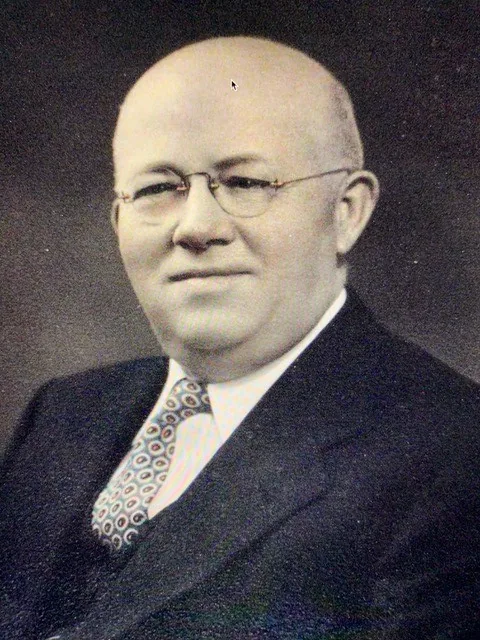
Although he was born in Suffolk, my grandfather spent most of his life in Hampton. During his early years, Jake lived with his mother, Hannah, in a house across from what later became Central Methodist Church on Chapel Street. Hannah earned a living as a seamstress. Municipal records listed her as a widow but that was not exactly so. Hannah was a “grass widow”—a term describing a woman living apart from her husband. Her husband, David Ferguson, abandoned her and their family when Jake was just a child. He never returned.
The cataclysmic collapse of the American economy in the early 1890’s, known as the Panic of 1893, led many people to move from place to place seeking better opportunities. Perhaps that is what brought my grandmother’s family (Samuel, Elizabeth and their daughter, Lottie Arline Thompson) to Newport News from Washington County. Jake and Arline Thompson married in 1912. Their family included 3 sons: Warner, Franklin, and William. Finally, a long awaited and greatly anticipated daughter arrived in 1929: Arline Elizabeth (Bette), my mother.
My grandfather was a banker. He worked for Citizens National Bank in downtown Hampton from 1917 until his retirement in 1952. Fifty years ago, when I was a paperboy, one of my customers who had worked with him at the bank remembered that one day Mr. Ferguson told her “a job worth doing is worth doing right.” That observation made an impression on her. I heard it often growing up and it made an impression on me as well.
My grandfather’s salary was not enough to support his family. So, my grandparents had to find other sources of income. In 1922, my grandparents built a house on Newport News Avenue. They designed it so that a sleeping porch was attached to the second floor on the back of the house. The Ferguson family slept on the porch and the four bedrooms were rented to boarders. Often, the boarders were teachers at Hampton High School—just around the corner. Sometimes, they were the young geniuses who came to town to work for the National Advisory Committee for Aeronautics (NACA). (The so-called “NACA nuts” impressed locals with their brilliant minds and their idiosyncratic ways.) It was not uncommon for me to have teachers who had lived with my grandparents and classmates with a parent who had been a boarder at one time as well.
It is difficult to exaggerate the importance of Central Methodist Church in the lives of the Ferguson family. They involved themselves in every aspect of ministry and membership. My Uncle Bill was called to be a minister. The Reverend William S. Ferguson served Methodist congregations all over Virginia.
Around 1960, the family decided that my grandparents should live the remainder of their days in my house with my family. So, my father and two of his shipyard friends worked evenings and weekends remodeling and adding onto our home. By the Fall of 1961, my grandparents had their own living quarters—a living room, a bedroom, a bathroom and a small kitchen—and they moved in. (By the way, I strongly endorse the idea of multiple generations of families living under the same roof. So much learning takes place!)
My grandfather’s stay was brief. Jake Ferguson passed away, quietly and serenely, just before Christmas in 1961. My grandmother lived with us until her death in 1973. The guest register provided by the funeral director indicates that over 150 people called on my family in the days after my grandfather’s death and that over 50 of them brought gifts of food. The register contains the signatures of lawyers, bankers, politicians, business people, church friends, and grandsons. I signed the register at least 5 times.
Originally published in St. John’s Newsletter, Spring 2022.