Lot 641
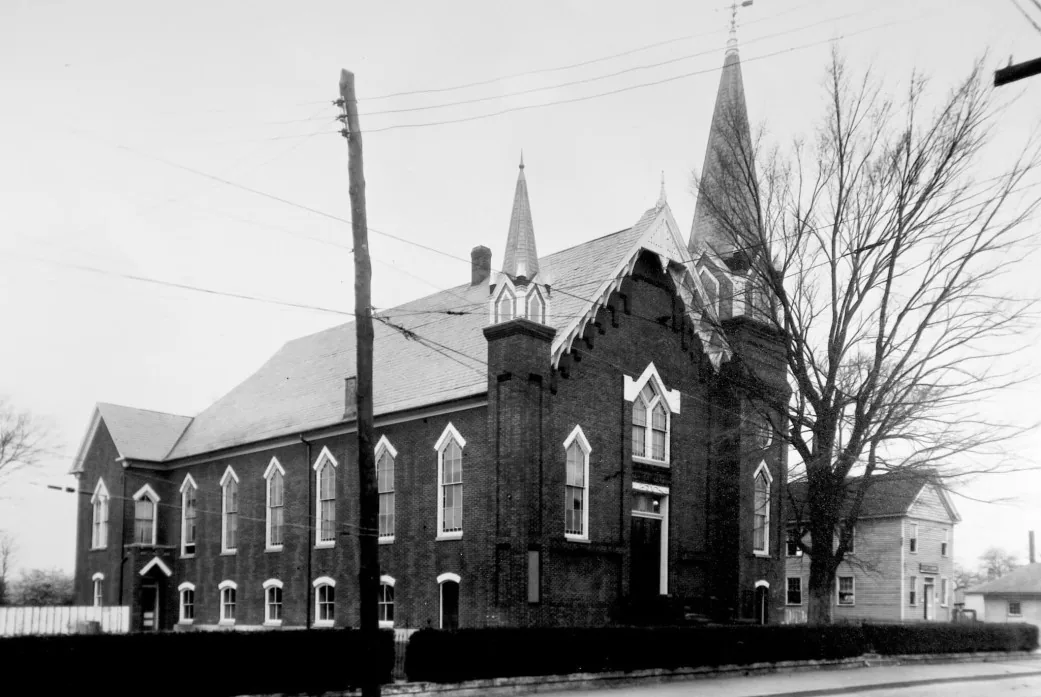
Chataigne’s Peninsula Directory, 1896-7, contained a listing of two churches in Hampton with the same name: First Baptist Church “[on] King [Street] opp[osite] the court house” and First Baptist Church “[on] King [Street] bet[ween] Union and Lincoln”. An asterisk [*] in front of the latter entry identified it as “colored”. In 1963, the Reverend Martin Luther King, Jr. observed that “the most segregated hour of Christian America was 11 o’clock on Sunday morning.” And, in 2012 findings from a study cited by the Pew Research Center found that 80% of Americans who went to church attended one where 80% of the congregation was comprised of a single racial or ethnic group. Evidently, the color-line, dominant in the so-called “Jim Crow” era, has not completely disappeared from American life. [When I was teaching high school students about the “color-line”, I often asked them if the “color-line” still existed in contemporary America. Usually, a student would respond: “Yes, everyday in our cafeteria!”]
During the first half of the 19th century, the Second Great Awakening—like the Great Awakening of the 18th century—stressed that everyone had equal access to God and to salvation. The Second Great Awakening was the engine driving the many reform movements of the 19th century: abolition, temperance, women’s suffrage, and many others. It emphasized that people should perfect their lives and the world in which they lived. And, the Second Great Awakening spurred the growth of Methodist and Baptist congregations in Virginia.
The First Baptist Church across from the old courthouse is known today as Hampton Baptist Church. The seeds that grew to be First Baptist Church were planted in its balcony during the antebellum years, when black congregants often substantially outnumbered the white church members sitting below. After years of worshiping in the balcony, the cataclysm of the Civil War provided the opportunity for the establishment of First Baptist Church in 1863 and the construction of a frame church building in 1865.
The second pastor of First Baptist Church was the Reverend William Taylor. Taylor served from 1868 until his death in 1873. Prior to the Civil War, Taylor was a carpenter by trade who purchased his freedom and that of his wife and daughter. Prior to the formation of First Baptist Church, Taylor was the informal leader of “colored Baptists” in Elizabeth City County and had the reputation of being an enthusiastic orator.
Taylor, his wife (Harriet Taylor), his son (William Taylor, Jr.) and his daughter (Mary Ann Magnos) are buried in lot 641 (near the parish house door leading to the church). “Sister” Harriet Taylor left a legacy, as well. In 1867, Mrs. Taylor was the co-founder of the United Order of Tents, a “Christian benevolent organization managed predominately by black women with membership in Georgia, North Carolina, the District of Columbia, and Virginia” that is still active today. At the time of her death, Mary Ann Magnos was teaching at a Freedmen’s Bureau school in Maryland.
In 1903, W.E.B. Du Bois observed that “the problem of the twentieth century is the problem of the color line—the relation of the darker to the lighter races of men in Asia and Africa, in America and the islands of the sea.” Much has changed since then. But, in some ways, the “color-line” remains.
Originally published in St. John’s Newsletter, December 2021.